Description
Industrial Cranes and Lifting Equipment Product Overview
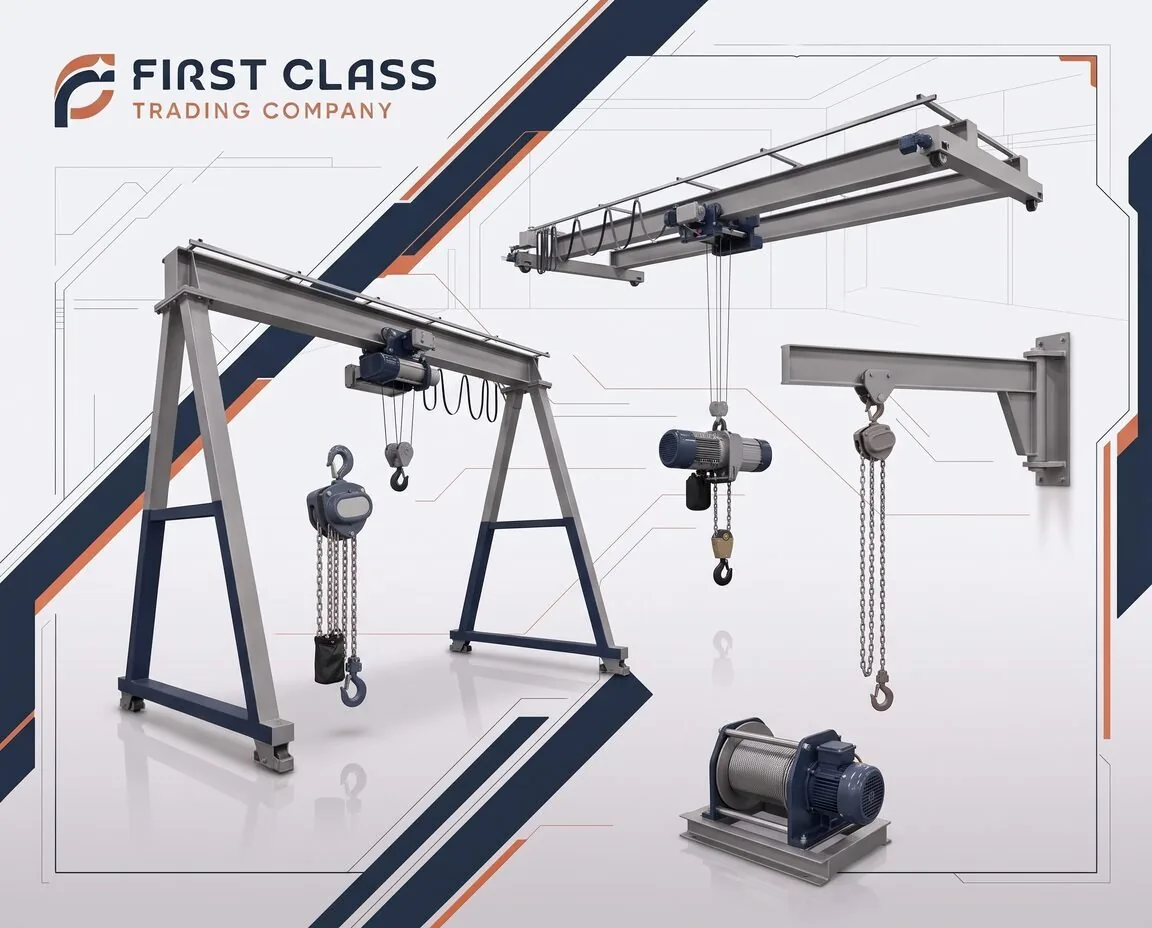
Industrial cranes and lifting equipment cover equipment used to raise, move or position a load as part of an industrial handling task. The approved range includes gantry cranes, overhead cranes, jib cranes, chain blocks, hoists, winches and lifting accessories. Each family serves a different lifting arrangement and should be considered against the required movement rather than treated as interchangeable.
A clear enquiry explains the load, where it starts, where it must be positioned and how the work area is arranged. A product category does not establish a universal lifting capacity, span, lift height, travel arrangement or control method. Those model-dependent points require review against the buyer’s stated duty and the proposed configuration.
Industrial Cranes and Lifting Equipment Features and Selection
Overhead, gantry and jib crane arrangements can be considered where the lifting path and workspace call for a fixed or supported lifting solution. Hoists, chain blocks and winches address different lifting or pulling arrangements, while lifting accessories must be selected with the intended load interface in mind. The supplier should assess the complete arrangement, not an isolated component.
Provide the load description, required lift, movement path, operating area, mounting or support context, preferred operation and any existing equipment interface with the request. These are buyer requirements rather than specifications assigned to every item in this range. Site drawings, photographs and a description of the working sequence can make the requested lifting task clearer.
Industrial Cranes and Lifting Equipment Applications and Technical Information
This range is relevant where materials, components or equipment need to be lifted, transferred or positioned in an industrial operation. Describe whether the duty is occasional handling, a repeated process or a maintenance task, and identify the load-handling route. That context helps distinguish a crane arrangement from a hoist, winch or accessory-led request.
Technical suitability is dependent on the proposed product and site conditions. The native Additional Information table below records the approved product families and enquiry context. Obtain supplier confirmation that the selected equipment, supporting arrangement and accessories are suitable for the stated load, movement and installation conditions before procurement.
What information identifies the lifting duty?
State what is being lifted, its required load information, the starting and final positions, and how often the task occurs. This gives the supplier a basis to review the requested lifting arrangement without assuming a standard configuration.
When should I consider a crane arrangement?
Consider it when the load must follow a defined lifting or travel path within a work area. Share the workspace layout, route and support context so the supplier can determine whether an overhead, gantry or jib approach is appropriate for the request.
Why do lifting accessories need to be included in the enquiry?
Accessories connect the lifting arrangement to the load and form part of the overall handling task. Describe the load interface and any existing attachment requirement so compatibility can be reviewed with the proposed equipment.
Which site details help a supplier assess the request?
Include the operating area, available support or mounting information, lift path, restrictions, working environment and any existing equipment interface. The supplier can then confirm the model-dependent technical arrangement for the supplied context.
Request a Quote for Industrial Cranes and Lifting Equipment
For a crane or lifting-equipment enquiry, identify the load and its pick-and-set positions, the required lift path, any span or support arrangement to be assessed, the duty pattern and the load-attachment interface. Site layout drawings are particularly useful where a gantry, overhead or jib arrangement may be considered.
Send the lifting brief through First Class Trading. Supplier review must establish the lifting arrangement, support conditions, compatible accessories and commercial terms for the stated handling operation.
Reviews
There are no reviews yet.