Description
Product Overview
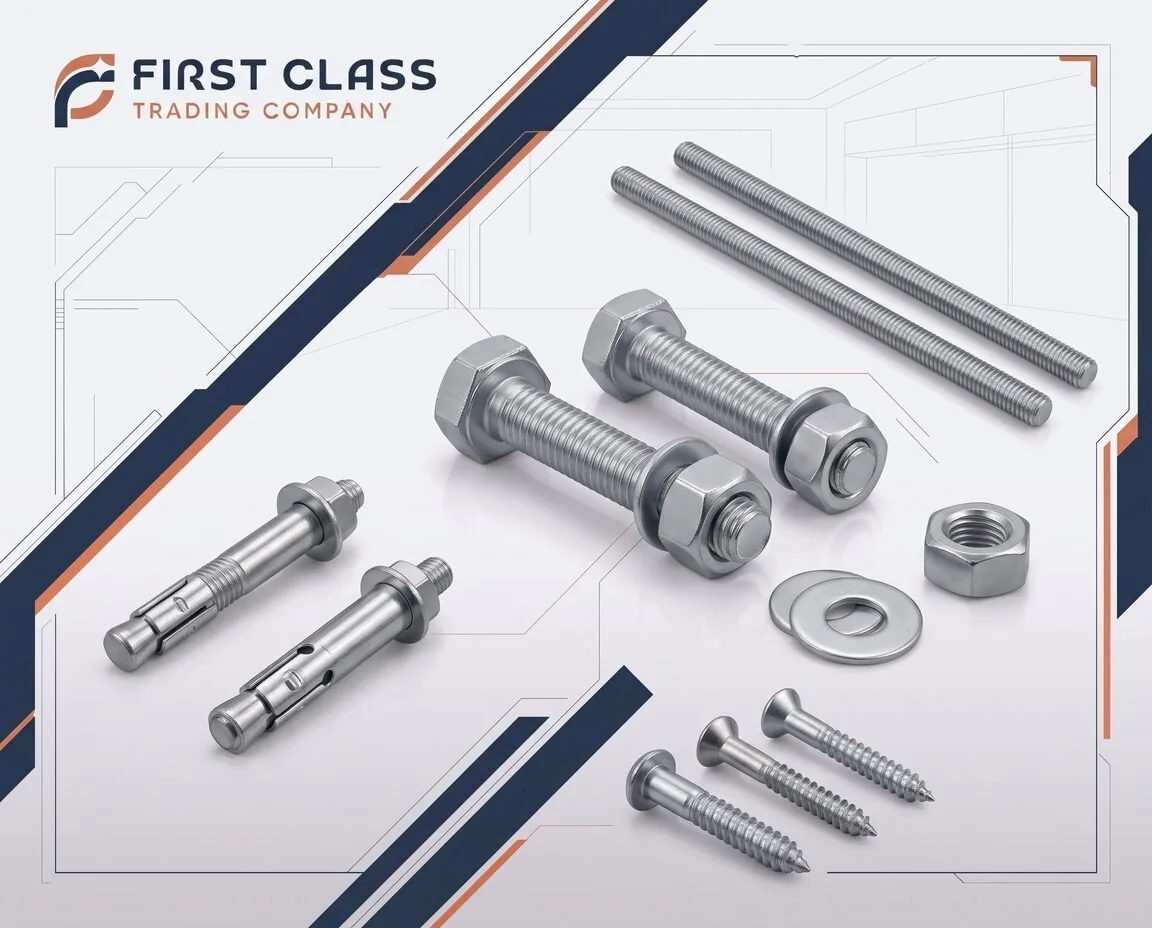
Fasteners and fixing systems are mechanical components used to assemble parts or secure an item to a substrate. The approved range includes bolts, nuts, washers, screws, anchors and threaded rods, each defined by the joint or fixing task it performs.
Selection starts with the fastening type, thread, diameter, length, buyer-required material or grade, finish and quantity. Anchor enquiries additionally need the substrate and installation context, which makes them different from a request for bar, profile or sheet material.
Features: Joint Detail and Fixing Interface
Bolts, nuts and washers work as an assembly around a threaded joint; screws are chosen around the mating component; threaded rods support continuous threaded connections. Anchors are assessed against the base material into which they are installed.
A drawing callout or physical sample can identify the required thread and geometry without guessing. The interface matters: a fixing for steelwork, machinery or concrete is not selected solely by a generic product family name.
Applications & Technical Information
Fasteners are used in machinery assembly, steelwork connections, maintenance replacements, fabricated assemblies and concrete-fixing work. Their role is joining or retaining components, not forming the primary metal member itself.
For technical review, identify the mating parts, thread or designation, required length, buyer-required finish and any installation limitation. Supplier confirmation is needed for the proposed fixing system and stated substrate application.
What identifies a fastener from a drawing?
Use the drawing callout or sample to state the fastening type, thread, diameter and length. This is more reliable than describing the item only as a bolt or screw.
Why is the substrate important for anchors?
An anchor works with a base material, so the receiving substrate and installation condition are essential buyer inputs for the enquiry.
When should washers be included?
Include washers when the joint detail or existing assembly calls for them. The complete assembly should be listed rather than treating each component as an assumed inclusion.
What is needed for a bulk fixing quotation?
Provide the item designation, thread and length, buyer-required material or grade, finish, quantity, application and delivery location; attach a schedule when several line items are involved.
Request a Quote
For fasteners, send the drawing callout, sample or full designation with thread, diameter, length, buyer-required grade or material, finish and quantity. For anchors, also identify the substrate and the intended fixing task. Fasteners and Fixing Systems RFQ route.
First Class Trading will route the mechanical-joint requirement for supplier review. The quotation should address the listed assembly components or anchor interface for the stated installation.
Reviews
There are no reviews yet.