Description
Product Overview
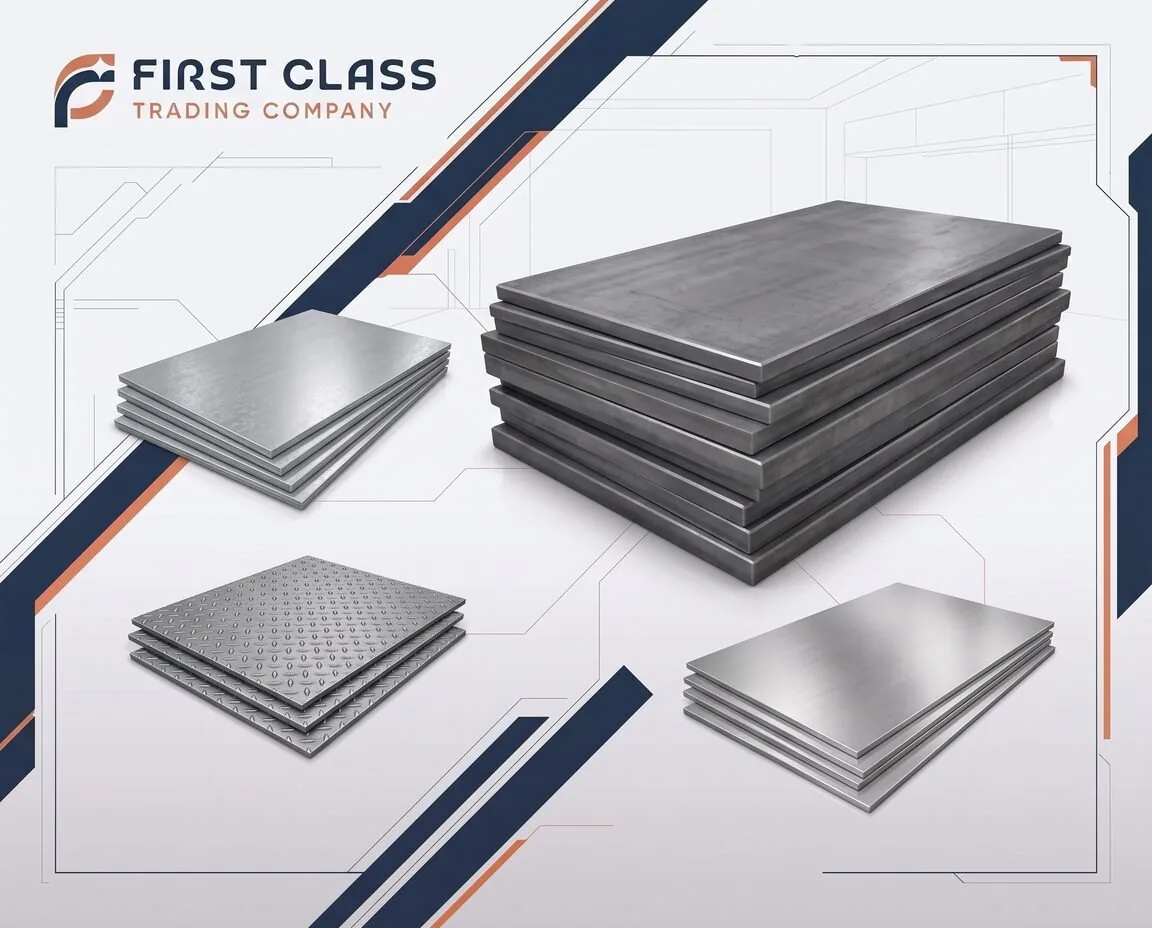
Steel plates and sheets are flat products used as panels, cut blanks, covers, floors, guards and fabricated surfaces. The approved scope includes mild-steel plate, galvanized sheet, chequered plate and stainless-steel sheet, each serving a different surface or fabrication context.
Specify whether the requirement is plate, sheet or a patterned or coated form, then give buyer-required thickness, width, length, grade, surface and quantity. Flat-product procurement is distinct from coils, which remain wound for downstream processing, and from long bars used as linear members.
Features: Flat Product and Surface Context
Flat stock can be cut, drilled, formed or incorporated into a larger assembly. Chequered surfaces are considered where a pattern is part of the floor or access function; galvanized and stainless forms are material or surface choices supplied by the buyer’s project brief.
Cut-to-size pieces and full-size sheets create different handling and fabrication requests. Drawings, nesting information and a list of finished parts help establish the required flat-product arrangement without assigning unsupported dimensions.
Applications & Technical Information
Typical uses include equipment panels, tank or enclosure fabrication, guards, cladding, covers, flooring and workshop cut parts. The relevant selection is governed by the finished flat component, not by a structural-section or reinforcement schedule.
Technical review should record form, material family, dimensions requested by the buyer, surface or pattern, fabrication operations, quantity and project documents. Supplier confirmation is required for the final flat product and quotation terms.
When should I specify plate instead of sheet?
Use the project’s own terminology and fabrication need, then state the requested flat form and buyer-controlled thickness or dimensions. The supplier should confirm the proposed product against the application.
What makes chequered plate a different enquiry?
The patterned surface is part of the intended floor, step or access use. State where it will be installed, the panel layout and the required surface context.
How is a flat-product request different from a coil request?
A plate or sheet request concerns cut or handled flat pieces; a coil request concerns wound feedstock for downstream processing. Identify the form needed by the next manufacturing step.
Which information helps quote fabricated panels?
Provide a part drawing or cut list, requested material family, dimensions, surface requirement, quantity and fabrication operation. These buyer inputs let the supplier review nesting or cutting needs.
Request a Quote
For plates or sheets, send the flat form, material family, buyer-required thickness, width and length, grade, surface or pattern, quantity, cut or forming requirement and delivery location. Attach drawings or a cut list for fabricated panels. Steel Plates and Sheets RFQ route.
First Class Trading will submit the flat-product brief for supplier review. The quotation should address the stated panel, cover, cladding, flooring or fabrication use and the requested product form.
Reviews
There are no reviews yet.